
Have you ever wondered why some designs immediately capture your attention, while others simply fade into the background? Often, the secret lies in the masterful application of color. Color is more than just an aesthetic choice; it’s a powerful psychological tool that evokes emotion, communicates messages, and establishes brand identity. Mastering color in graphic design is not just an art; it’s a science that can transform your projects from good to truly unforgettable.
Understanding how colors interact, what emotions they convey, and how to apply them effectively across various mediums is a cornerstone of professional design. It’s the difference between a design that merely exists and one that resonates deeply with its audience. If you’re ready to unlock the full potential of your designs, a solid grasp of color theory and practical application is essential. For comprehensive training, consider exploring resources like the Graphic Design Bundle.
The Power of Color Theory: Beyond Basic Hues
At its core, color theory provides a framework for understanding how colors work together. It delves into concepts like hue, saturation, and value, which are fundamental to creating visually appealing and impactful designs. A deep dive into these elements allows designers to make intentional choices, rather than simply picking colors they like.
Knowing the basics of the color wheel – primary, secondary, and tertiary colors – is just the beginning. True mastery comes from understanding how to manipulate these elements to achieve specific visual effects. This foundational knowledge empowers you to build compelling visual narratives and strengthen your overall design communication.
Demystifying Color Models: RGB vs. CMYK
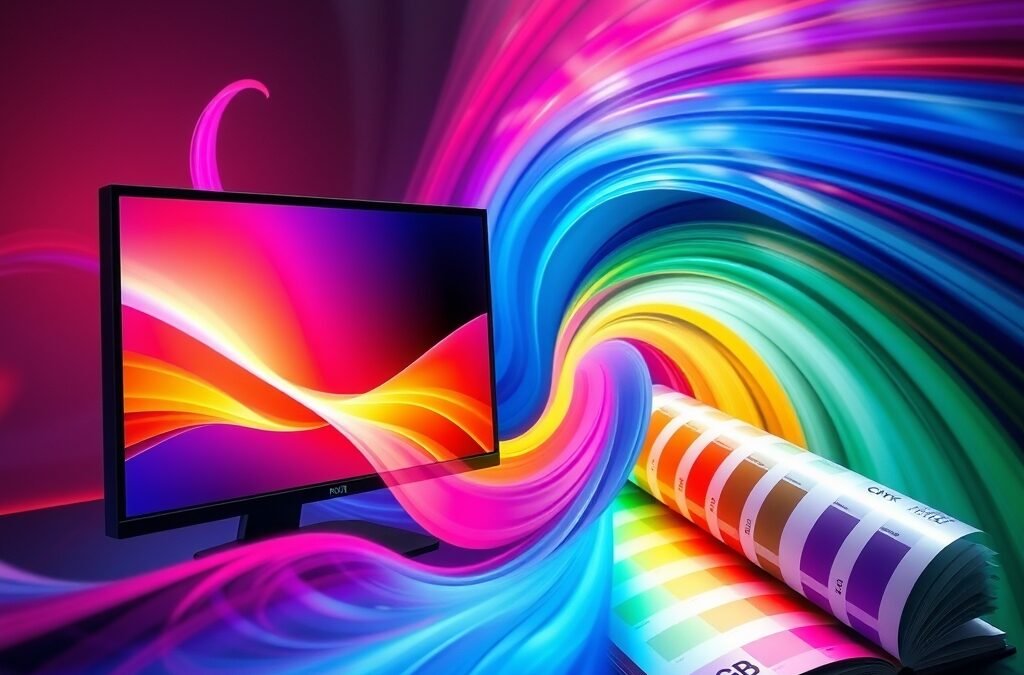
One of the most crucial aspects of applying color in graphic design is understanding the different color models, primarily RGB and CMYK. These models dictate how colors are rendered, and choosing the wrong one can lead to disappointing results, especially when transitioning from screen to print.
-
RGB (Red, Green, Blue)
RGB is an additive color model used for digital displays, such as monitors, televisions, and web graphics. It works by combining varying intensities of red, green, and blue light to create a wide spectrum of colors. When all three colors are at their maximum intensity, they produce white. Always design in RGB when your project is destined for screens.
-
CMYK (Cyan, Magenta, Yellow, Key/Black)
CMYK is a subtractive color model primarily used for print. Printers mix these four ink colors to produce a range of hues. Unlike RGB, where combining all colors creates white, in CMYK, combining all colors theoretically creates black (though a true black typically requires a dedicated black ink, hence the ‘K’). For any design intended for physical printing, working in CMYK is non-negotiable to ensure color accuracy.
Properly setting up your color profiles in your design software is a best practice that prevents unwanted color shifts. This attention to detail ensures your designs look consistent across all mediums, reflecting your professional approach.
Crafting Harmonious Palettes: Tips and Tricks
Creating a beautiful and effective color palette is an art form in itself. It involves selecting a range of colors that work together seamlessly, enhancing the overall message and aesthetic of your design. Here are some proven tips and tricks for building stunning color schemes:
-
Explore Color Scheme Types:
Experiment with monochromatic (variations of a single hue), analogous (colors next to each other on the color wheel), complementary (colors opposite each other), or triadic (three colors evenly spaced) schemes. Each type creates a distinct mood and visual impact.
-
Draw Inspiration from Nature:
Nature offers an endless supply of harmonious color combinations. Observe sunsets, forests, or oceans for organic and balanced palettes that often resonate well with audiences.
-
Use the 60-30-10 Rule:
A popular guideline for balancing colors, this rule suggests using a dominant color for 60% of the design, a secondary color for 30%, and an accent color for 10%. This creates visual interest without overwhelming the viewer.
-
Test for Accessibility:
Always check your color choices for contrast, ensuring they are readable for everyone, including those with color blindness. Accessibility is a key component of inclusive design practices.
By applying these techniques, you can move beyond guesswork and create intentional, impactful color palettes that elevate your graphic design projects.
Psychology of Color: Speaking to Your Audience
Colors have profound psychological associations that can influence perceptions and emotions. Understanding color psychology allows you to make strategic choices that align with your design’s purpose and target audience. For instance, blue often conveys trust and professionalism, making it ideal for corporate branding, while red can signify passion, energy, or urgency.
Green often evokes nature, growth, and tranquility, making it suitable for environmental or health-related designs. Yellow radiates optimism and warmth, perfect for capturing attention and conveying cheerfulness. By consciously selecting colors that resonate with your intended message, you can enhance the effectiveness and emotional connection of your designs.
Elevate Your Designs with Professional Color Techniques
The journey to becoming a proficient graphic designer involves continuous learning and application of advanced techniques, especially when it comes to color. From understanding color models for different outputs to crafting psychologically resonant palettes, every detail contributes to a superior final product. Embracing these best practices will not only improve your current projects but also set a strong foundation for future creative endeavors.
If you’re serious about taking your design skills to the next level and truly mastering the art and science of color, comprehensive resources are invaluable. The Graphic Design Bundle offers an extensive collection of tools and tutorials designed to help you navigate complex design challenges, including in-depth modules on color theory and application. Equip yourself with the knowledge to create truly vibrant and effective designs that stand out in any medium.