
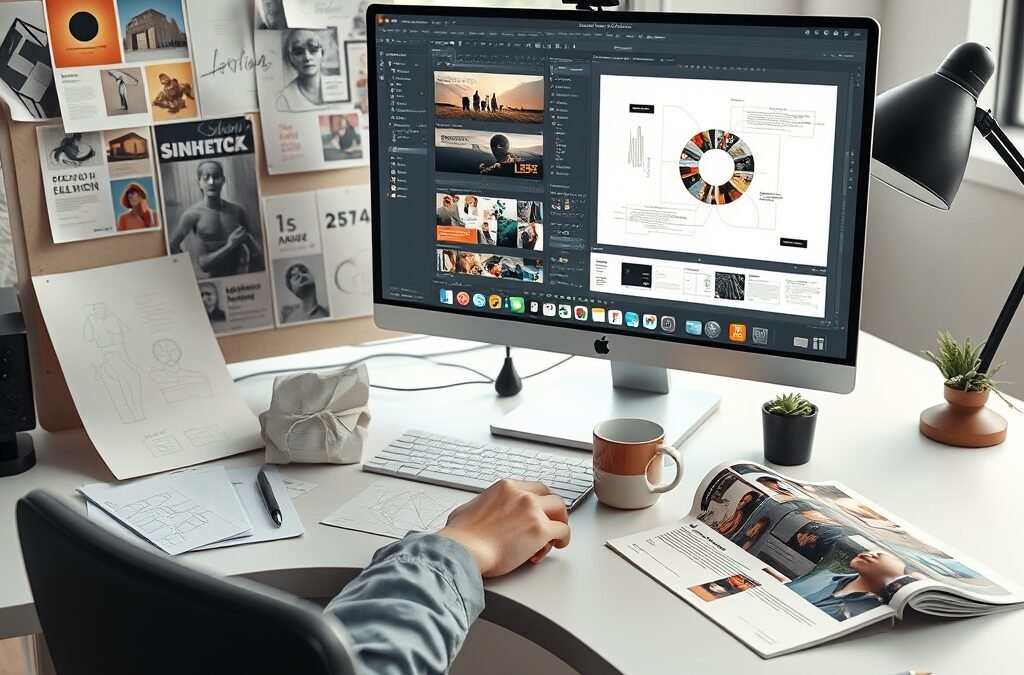
Every truly impactful visual begins not with a click or a brushstroke, but with an idea – a spark waiting to be fanned into a flame. The journey from a nascent concept to a breathtaking visual masterpiece in **graphic design** is rarely linear. Instead, it’s an iterative dance of creation, critique, and refinement, demanding both creative vision and technical precision. Understanding this process is key to unlocking your full potential and consistently delivering designs that captivate and communicate.
The Genesis of Design: From Idea to Blueprint
Before diving into your design software, the most crucial step is conceptualization. This initial phase involves understanding the project’s goals, target audience, and core message. It’s about asking the right questions and laying a solid foundation that will guide every subsequent decision.
Developing Your Core Concept and Mood Board
Start by brainstorming keywords, themes, and visual metaphors. Create a mood board – a collection of images, colors, typography, and textures that evoke the desired aesthetic and emotional response. This visual blueprint ensures consistency and helps you articulate your vision to others, including clients or collaborators. Don’t underestimate the power of rough sketches; they allow you to rapidly explore various layouts and compositions without getting bogged down by digital complexities.
Digital Canvas: Bringing Concepts to Life with Precision
Once your conceptual groundwork is solid, it’s time to translate those ideas into digital form. This is where your chosen design tools become an extension of your creative mind. Whether you’re working on a logo, a brochure, or a website layout, the digital environment offers unparalleled control and flexibility.
Leveraging Essential Graphic Design Tools for Impact
The right tools empower you to execute your vision with clarity and professionalism. From vector illustration programs that create scalable graphics to powerful photo manipulation software and intuitive layout applications, each serves a vital role in the design ecosystem. Mastering these tools means understanding their capabilities and how to apply them effectively to achieve stunning visual results. To truly elevate your craft and gain access to a comprehensive suite of resources, consider exploring a curated collection of design assets and learning materials. The Graphic Design Bundle from designvault.store offers an invaluable resource for designers looking to enhance their toolkit and expand their creative horizons.
Refinement and Iteration: Polishing Your Visuals
The first draft of any design is rarely the final one. Iteration is the heartbeat of the design process, allowing you to fine-tune elements, address feedback, and optimize for impact. This stage demands a critical eye and a willingness to revise.
Seeking Feedback and Embracing Revisions
Share your designs with trusted peers, mentors, or clients. Constructive criticism is a gift that reveals blind spots and offers fresh perspectives. Learn to differentiate between subjective preferences and actionable suggestions that improve clarity, hierarchy, and overall effectiveness. Each revision brings you closer to a flawless outcome.
Best Practices for Digital and Print Perfection
The final output medium dictates specific technical considerations. For digital designs, focus on optimal resolution, efficient file sizes, and responsive layouts. For print, adherence to CMYK color profiles, proper bleed, and safe zones are paramount to avoid costly errors. Understanding these nuances ensures your beautiful designs translate perfectly from screen to paper or web.
Elevating Your Designs: Advanced Techniques and Insights
Beyond technical proficiency, truly exceptional graphic design tells a story and evokes emotion. It’s about more than just aesthetics; it’s about strategic visual communication.
-
Mastering Visual Storytelling:
Use imagery, color, and typography to craft a compelling narrative that resonates with your audience. Think about the emotional journey you want to take them on.
-
Strategic Use of White Space:
Often overlooked, white space (or negative space) is a powerful design element that improves readability, emphasizes key elements, and creates a sense of sophistication and balance.
-
Consistency Across Platforms:
Ensure your brand identity remains cohesive across all touchpoints, from social media graphics to print collateral. This builds recognition and trust.
The journey of a graphic designer is one of continuous learning and evolution. Each project presents a new challenge, an opportunity to hone your skills and push your creative boundaries. By embracing a structured, iterative approach, leveraging powerful tools, and committing to ongoing refinement, you can consistently transform raw ideas into polished, professional designs that truly make an impact. Remember, the right resources can significantly accelerate your learning curve and provide the building blocks for your success. Explore comprehensive collections like the Graphic Design Bundle from designvault.store to equip yourself with the knowledge and assets needed to create stunning visuals and elevate your design prowess.